Hellenistic Astrology Explained
Hellenistic astrology (also known as Greek astrology) emerged in the Mediterranean region shortly after the death of Alexander the Great (323 BCE). It is an important phase in the history of astrology. Hellenistic astrology incorporated Babylonian techniques, Egyptian traditions, and mixed them with Greek philosophical concepts.
Origins of Hellenistic Astrology
Hellenistic astrology began in the Greek-influenced regions of the Mediterranean, especially in Egypt. The city of Alexandria in Egypt became a key center of scholarly activity, where many of the era's advancements in astronomy and astrology were made. The fusion of Babylonian mathematical techniques, Egyptian calendrical systems, and Greek natural philosophy created a distinctive new form of astrology. Hellenistic astrology also took influences from the philosophical schools of its time, including Stoicism and Hermeticism.
The Most Important Features of Hellenistic Astrology
-
The Birth Chart:
- Conjunction (0°):
A Conjunction occurs when two planets are in the same position on the birth chart. This is the most powerful aspect and signifies that the energies of the two planets amplify each other. A Conjunction may even occur between three or more planets. In this case, its effect is even more powerful. - Sextile (60°) and Trine (120°):
The Trine and Sextile aspects are considered to be harmonious aspects, in which the energies of the planets support each other. They are beneficial, but weaker than the conjunction. - Square (90°):
A Quartile aspect is generally considered to be a negative aspect in which the energies of the planets are at odds with each other, and may block or interfere with beneficial effects. - Opposition (180°):
An Opposition is the most powerful negative aspect between planets. It occurs when two planets are at opposite ends of the birth chart. This aspect usually has a negative impact on the character and faith of a person.
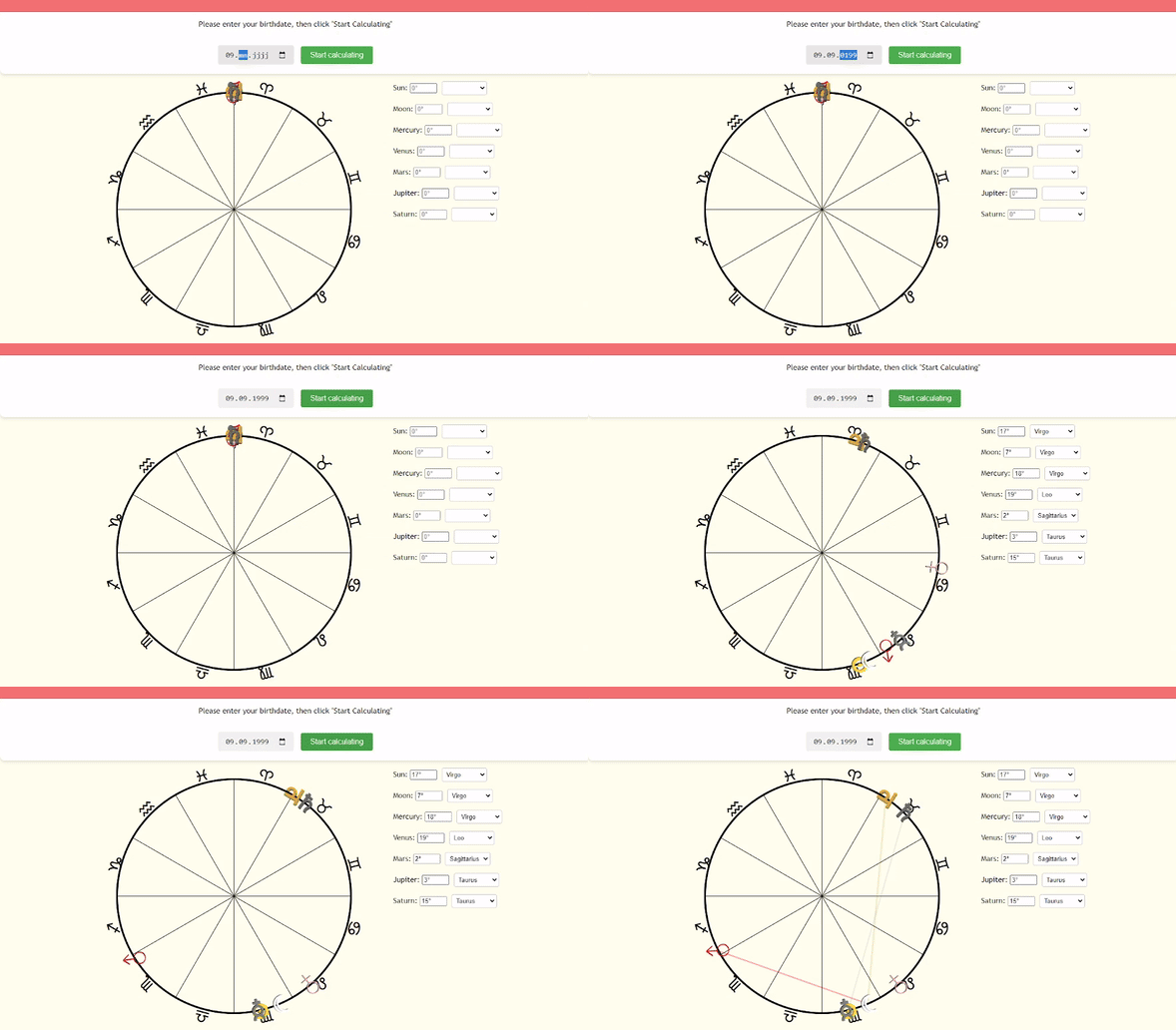
The birth chart (also called natal chart) is central to Hellenistic astrology. It maps the sky at the moment of birth. This chart is used to interpret various aspects of a person's character and destiny.
Planetary Influences:
Each planet is associated with specific a god or quality. Through their positions and relationships, various aspects of a person’s life and destiny can be inferred. The Greeks developed a system to classify the relationships between the planets, that is called “aspects”. An aspect is determined by calculating the distance between planets on the chart.
The most important aspects are:
The 12 Zodiac Signs
The Zodiac system of Babylonian astrology is fully adapted into Hellenistic astrology. Each of the 12 zodiac signs represents different aspects of the personality. The signs are further divided into modalities (Cardinal, Fixed, Mutable) and elements (Fire, Earth, Air, Water) to better account for commonalities between the signs.
- Aries (March 21 - April 19)
Element: Fire
Modality: Cardinal
Personality Traits: Energetic, enthusiastic, possesses leadership qualities. Pioneering, courageous, and direct. - Taurus (April 20 - May 20)
Element: Earth
Modality: Fixed
Personality Traits: Reliable and devoted. Appreciates stability and comfort, strong connection to the world. - Cancer (June 21 - July 22)
Element: Water
Modality: Cardinal
Personality Traits: Sensitive and nurturing. Attached to family, strong protective instincts. - Leo (July 23 - August 22)
Element: Fire
Modality: Fixed
Personality Traits: Dramatic, creative, self-confident. Loves to receive admiration, often very attractive. - Virgo (August 23 - September 22)
Element: Earth
Modality: Mutable
Personality Traits: Careful and analytical. Conscientious, strong sense of responsibility. - Libra (September 23 - October 22)
Element: Air
Modality: Cardinal
Personality Traits: Has a strong sense of justice. Seeks balance and harmony, good mediator. - Scorpio (October 23 - November 21)
Element: Water
Modality: Fixed
Personality Traits: Very passionate character. Resourceful, deep insights into life's mysteries. - Sagittarius (November 22 - December 21)
Element: Fire
Modality: Mutable
Personality Traits: Loves freedom and adventure. Enjoys traveling and exploring new things. - Capricorn (December 22 - January 19)
Element: Earth
Modality: Cardinal
Personality Traits: Ambitious and disciplined. Cares about orders, full of determination. - Aquarius (January 20 - February 18)
Element: Air
Modality: Fixed
Personality Traits: Innovative and eccentric. Individualistic, likes to think deeply about the world. - Pisces (February 19 - March 20)
Element: Water
Modality: Mutable
Personality Traits: Empathetic and intuitive. Makes a good artist, has a rich inner life.
Still curious?
Try our free Hellenistic Astrology Calculator to find out what ancient thinkers have to say about your birth chart.