Babylonian Astrology Explained
Astrology has captivated the human imagination for millennia, providing insights both into our personality, and into our destiny. Among the earliest practitioners of this esoteric science were the Babylonians, whose sophisticated system laid the groundwork for much of Western and Eastern astrology.
The Origin of Babylonian Astrology
Babylonian astrological practices were developed in the ancient region of Mesopotamia, modern-day Iraq, around the middle of the 2nd millennium BC. Stemming from the astrological traditions of the Sumerians, the Babylonians developed a complex system that closely linked celestial phenomena with world events. Their primary interest was not the investigation of any personal destiny, but the discernment of the will of the gods for the benefit of the entire kingdom.

The Role of Celestial Bodies
In the Babylonian religion, celestial bodies represented divine entities. The sun, moon, planets, and stars were considered to be manifestations of gods. For this reason, the observation of the heavens was one of the tasks of Babylonian priests. Through years of diligent observations and study, Babylonian priests were able to notice repeating patterns in the night sky. Based on their observations, they created a lunisolar calendar (that is a calendar that is based both on the sun and the moon). They also divided the sky into 12 spheres, with each sphere being named after a significant star that it contained. From this, our modern system of the zodiac was developed.
As previously mentioned, each planet was believed to represent a certain deity of the Babylonian pantheon. The most important god-planet-pairs were:
- Marduk and Jupiter: Marduk was the king of the Babylonian pantheon. He was associated with the planet Jupiter. Together, they represented justice and power.
- Ishtar and Venus: Ishtar was the goddess of both love and war. She was linked to Venus.
- Ninurta and Saturn: Ninurta was the god of agriculture. He was believed to reside with Saturn.
The Babylonians used a number of astrological methods in order to predict the fate of the king and nation. The most important source of Babylonian astrological wisdom is the text "Enuma Anu Enlil", which is preserved in numerous clay tablets. The omens of the "Enuma Anu Enlil" mostly deal with affairs of the state and royal family. For example, a lunar eclipse was believed to forebode misfortune, unrest and war in the land.
Legacy of Babylonian Astrology
The influence of Babylonian astrology extends far beyond its time and geography. The Greeks, who encountered this sophisticated system during the Hellenistic period, were particularly fascinated by it. Through Greek translations and adaptations, Babylonian astrology contributed to the development of Hellenistic astrology, which in turn influenced both Western and some forms of Indian astrology.
Still curious?
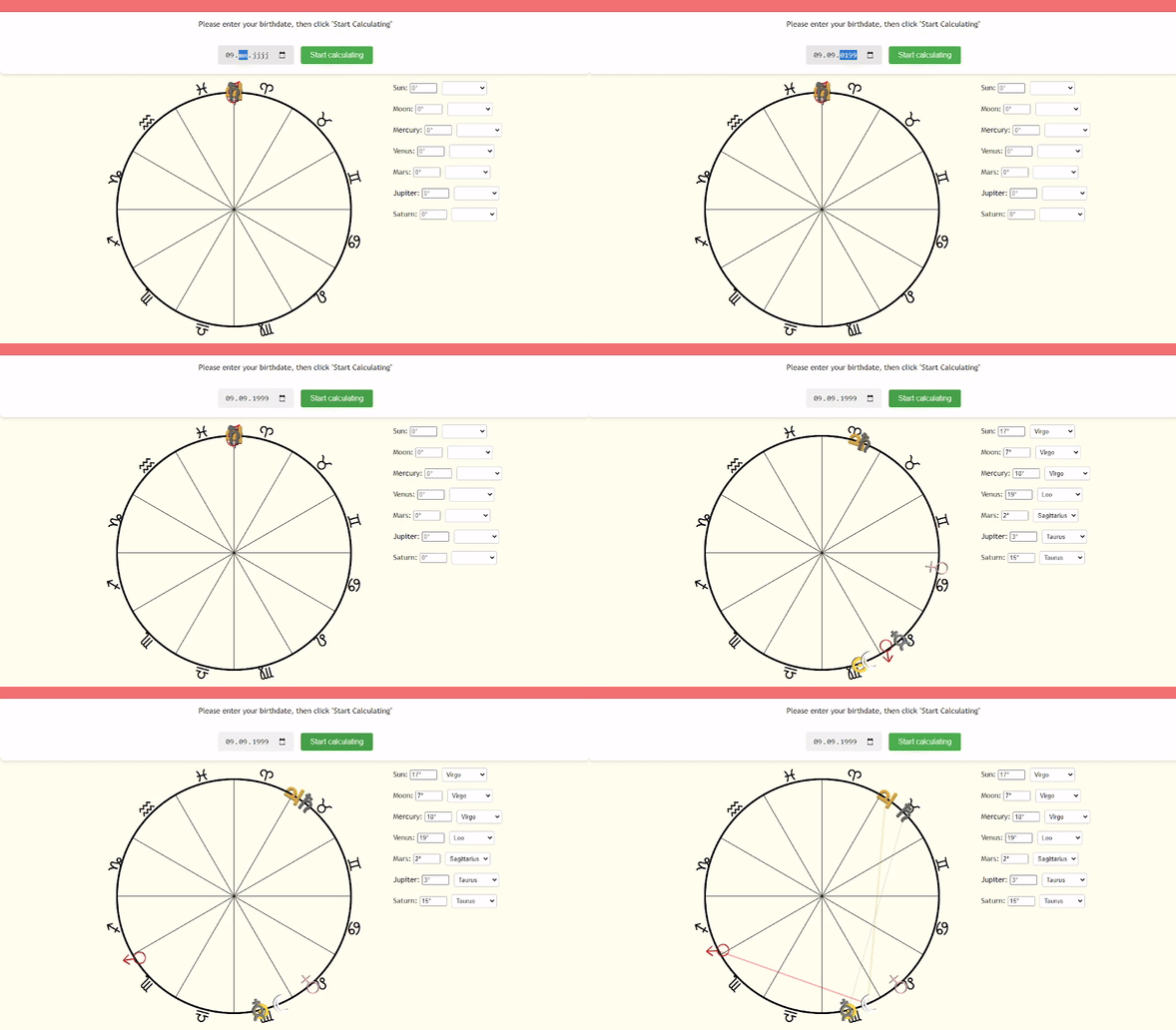
If you want to learn more about Babylonian astrology, and see it in action, check out our free Babylonian Astrology Calculator. Based on historical records, you can learn what Babylonian astrology has to say about your birthday or significant days of your life.